


2. THEORETICAL FOUNDATIONS
2.5. Velocity of the flow of gas flooding
The flow limit velocity, is the burden of flooding. The gas phase can not have any velocity, it has a maximum velocity of flooding. This velocity is the velocity of gas flow tends to an upper limit. This velocity must take into account because if you work at extremely high velocities can cause flooding in the column. This will usually work with a speed value of 50% of the speed of flooding.
The mass velocities of gas and liquid influencing the height of padding necessary so that this velocity decreases by increasing the height of the fill necessary. For this reason, should work with speeds as long as there is a significant problem economic spending that produced losses of pressure.
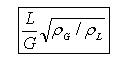
The calculation the speed of flooding are made from the graph of Lobo, represents on x-axis:
And y-axis:
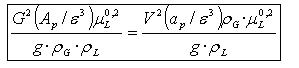
Where:
G: mass velocity of gas (kg/m2h).
ρG and ρL: density of gas and liquid (Kg/m3).
µL: viscosity of liquid (centipoise).
g: acceleration of gravity (1,27·108 m/h2).
V: linear velocity of gas (m/s).
Ap/Є3: specific surface of filler (m2/m3), their values are known for different types of filler.
Below is the graph of Lobo:

Figure 2.13: Graphic Lobo.
Source: Problemas de ingeniería química, Ocon-Tojo.
With these equations can be found which is the flow of gas flood and flood their speed.